When Fauquier High School (FHS) closed its doors in March 2020, few anticipated the long-lasting effects the COVID-19 pandemic would have on students, teachers, and the broader school community. What began as an expected two-week hiatus quickly turned into months of isolation, virtual learning and a complete reinvention of how education functioned. Classrooms shifted from bustling hallways to quiet bedrooms, and routines that once shaped every school day disappeared overnight. Teachers, administrators and students each faced their own challenges, many of which continue to shape classrooms today.
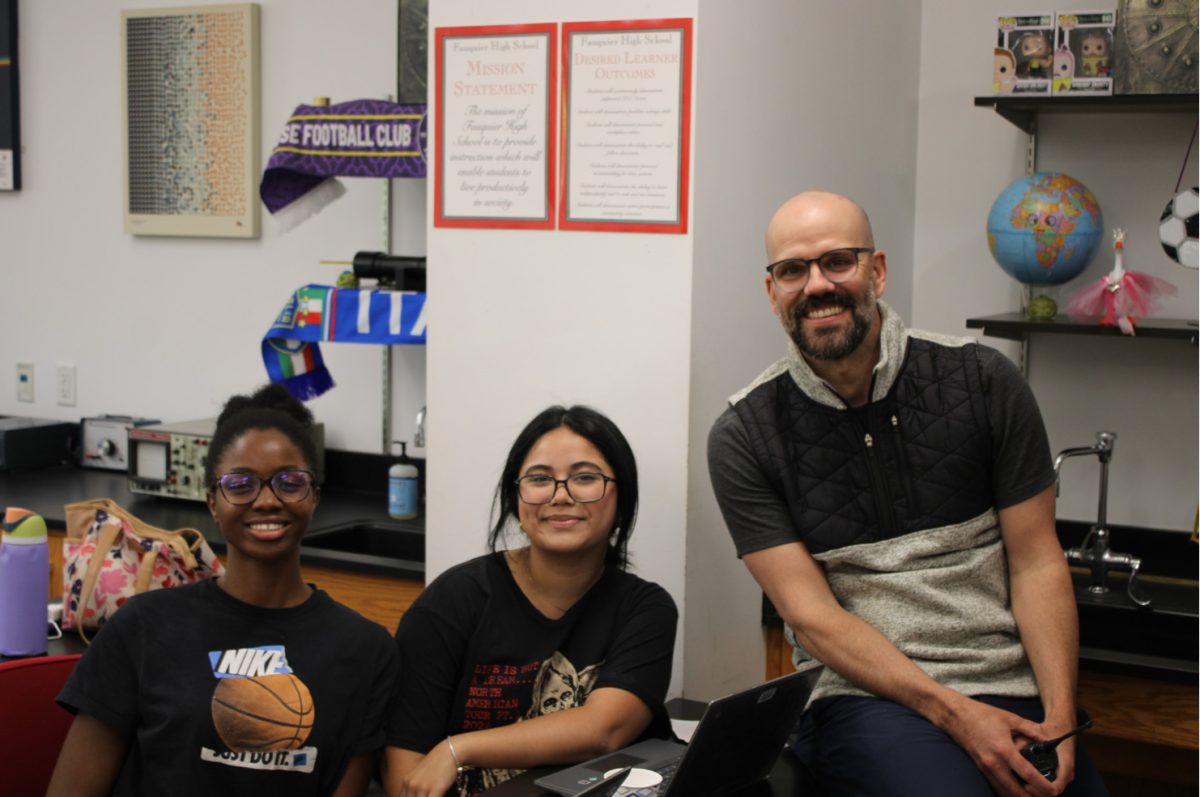
For many teachers, the most significant challenge was the abrupt shift to technology-centered learning. Math teacher Jennifer Feehan described how the pandemic revealed unexpected academic gaps: “Students are lacking basic skills—spelling, general arithmetic. It has also been difficult having students come together to work effectively in groups,” she shared. Even with years of experience using technology in her classroom, Feehan believes virtual instruction made it difficult to ensure every student truly understood the material.
Earth Science teacher Stephen Wright shared a similar frustration, but for a different reason. “Instructionally, the technology worked great, but getting work out of students was the challenge. I’d say about 50 percent of the students just wouldn’t participate fully,” he conveyed.
The tools worked, but convincing students to complete assignments or even to show up proved to be an obstacle teachers had never encountered on this scale.
While teachers adjusted their lesson plans, students struggled too. Some felt overwhelmed by the lack of structure, while others (especially younger students) missed out on foundational skills typically gained in early grades. Assistant Principal Nick Brousse, who was working in Fredericksburg, Va., during the pandemic, emphasized how widespread the setbacks were. His position was clear: the entire state had to “figure it out as we went,” and younger students in particular were heavily impacted because they were still learning basic reading and writing skills.
But importantly, Brousse stressed that no one is to blame for those gaps. Not teachers, not students, not parents.
He explained, “Most students struggled without the routine and structure that a school can provide… That social connection and sense of community – intangible and invaluable benefits – really impacted students negatively.”
The pandemic created the circumstances; everyone simply did the best they could with the time and resources available. His insight underscores the broader theme of the pandemic: shared struggle, not individual fault.
Even students outside traditional classrooms had their own unique experiences. One homeschooled student shared that the transition was much smoother for her than it was for most students her age: “I have been homeschooled since I was in second grade, so it was really easy to stay on track… One of the things that helped most was that I got to go to a small co-op that consisted of a few close families, so I still got a proper amount of socialization.”
Her experience stands in sharp contrast to the thousands of students who felt disconnected from their peers, highlighting how differently every household navigated the crisis.
Although assembling and adapting to the newly developed curriculum was difficult, many educators agreed that attention spans were already declining before COVID-19. Essentially, the consensus was to place blame on the usage of smartphones and social media.
“COVID is not responsible for that, but COVID helped accelerate that… Our current students are the first cohort who have spent their entire lives with access to smartphones and social media,” Brousse noted.
The pandemic didn’t create the digital-age challenges schools face today, but it magnified them.
Wright pointed out that academic integrity also changed during this time. With Chromebooks being rolled out county-wide, a change planned regardless of the pandemic, teachers saw an increase in dishonesty and blatant forgery. He explained that although artificial intelligence (AI) has created new concerns, the most vigorous defense is still human: knowing students personally. Wright believes the solution, “stronger than any AI detector engine,” is simply understanding how each student writes and thinks, which makes dishonest work easy to recognize.
English teacher Jennifer Major added that the most significant gap she sees today is not academic, but motivational. “Perhaps there are slight gaps in reading abilities; however… there is a lack of resilience in students since COVID.” She explained that many ninth graders struggle with independence, deadlines and following instructions (skills that weakened during the period of virtual learning). School, once a place of routine, had to rebuild those habits from scratch.
While the challenges were immense, the pandemic also revealed unexpected strengths. In a 2023 education article in which Brousse was featured as a guest speaker, he praised how communities rallied around their schools. He recalled food service teams delivering meals, technology departments setting up Wi-Fi hotspots and educators placing greater emphasis on students’ mental health. In his words, schools became “the last big social safety net.”
At FHS, teachers also noticed positive changes. Major described what she calls the “COVID positives,” especially the increased desire among students to collaborate. “[I had] the realization that kids really needed to work together… I revamped some assignments, and I’ve kept them that way. Connection, once taken for granted, became something students craved.
Wright added that issues like rural internet access, highlighted during the pandemic, are still relevant today: “We were having to distribute hotspots and allow a lot of leeway for students who didn’t have reliable internet at home,” Wright noticed.
The digital divide, once invisible to many, became impossible to ignore.
Feehan reflected on another bright spot: a renewed appreciation for educators. “It was even more evident during the pandemic when people realized just what lengths teachers will go to for our students to be successful,” she exclaimed.
Across the country, teachers became front-line problem solvers, adapting at a moment’s notice.
Across interviews, one theme was unanimous: everyone feels more prepared now. Even if no one hopes to repeat the virtual learning era, teachers, administrators and students all agreed that they would face future disruptions with far greater confidence thanks to the rushed (but invaluable) lessons learned between 2019 and 2020.
The classrooms at FHS may look the same as they did before the pandemic, but the people inside them are not. COVID-19 reshaped attention spans, foundational skills, teaching strategies and educational values. It exposed weaknesses, strengthened communities and forced schools to evolve.
Ultimately, the pandemic didn’t just push education into the digital age; it reminded everyone just how essential schools are, not only for academic learning but for connection, stability and community. FHS’s story is not just one of loss or struggle, but one of resilience and a reminder that even in isolation, education finds a way forward.