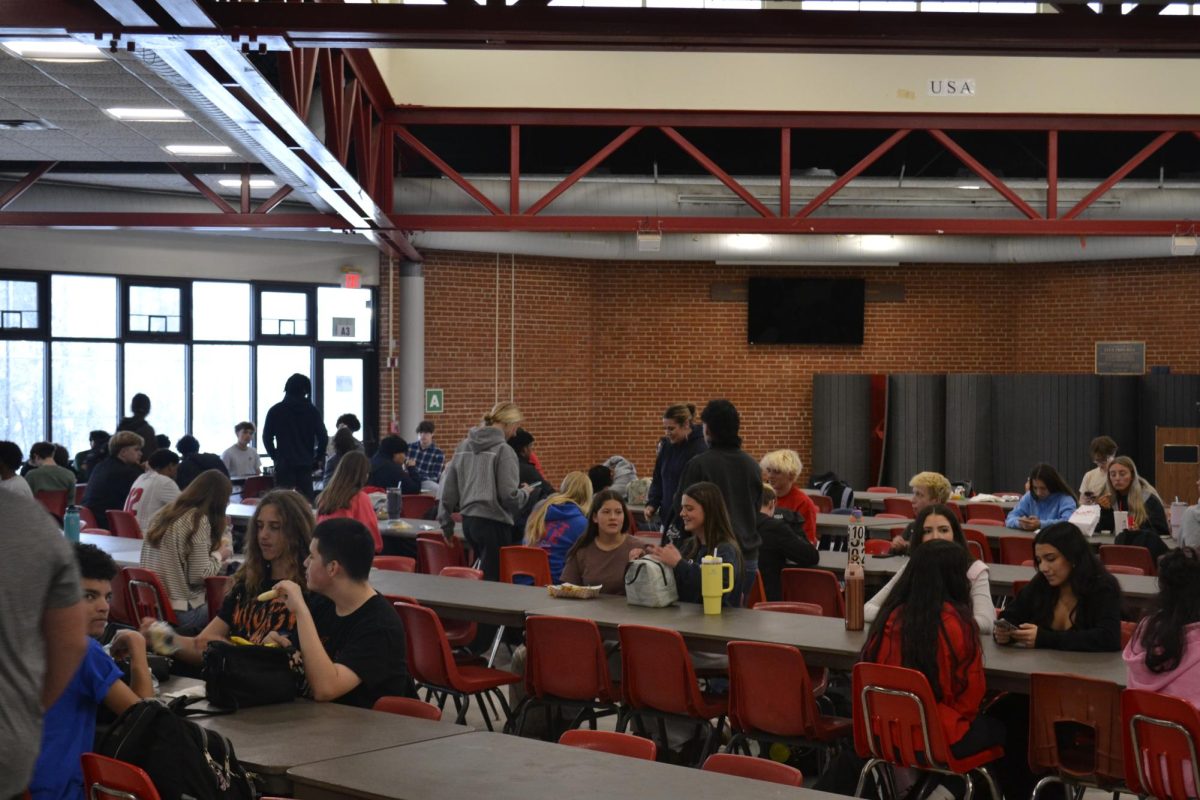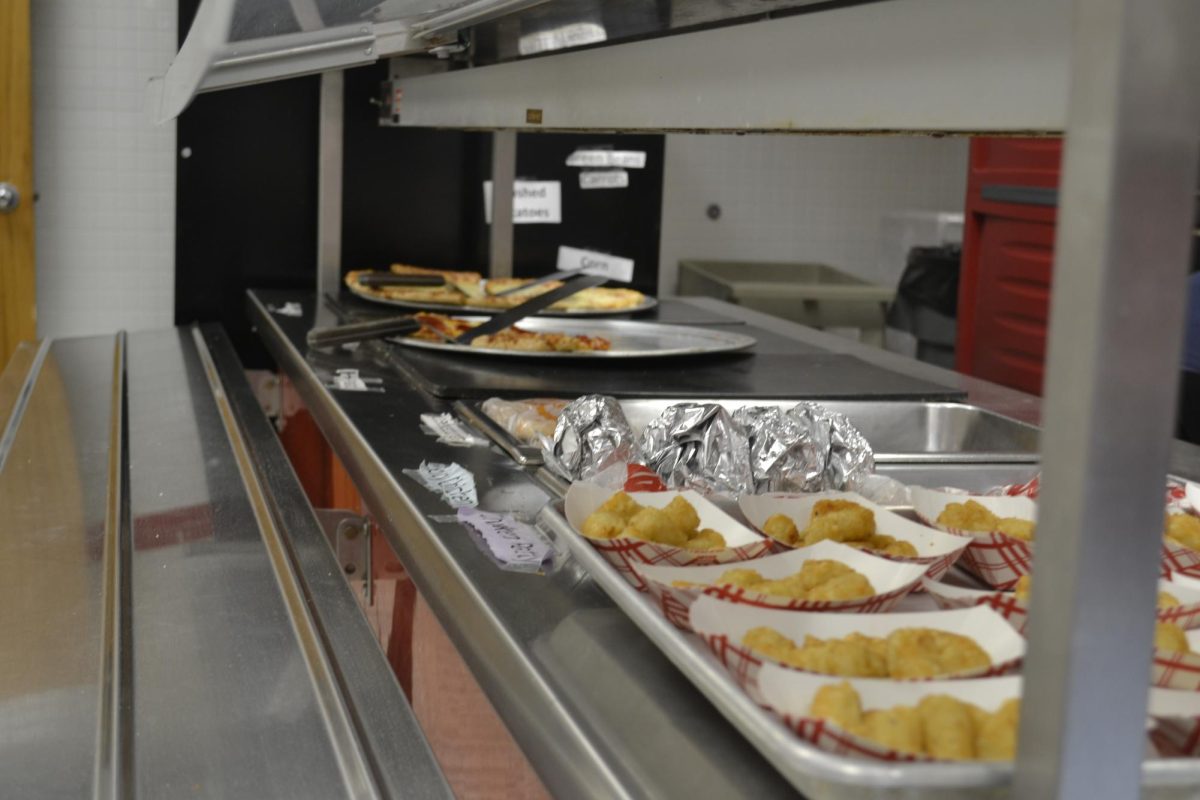
The school bell rings, releasing hundreds of students for what is widely known as the best time of day, lunch. In the past, this had been known as a time when students could forget the stresses of school life, or even their homelife, and enjoy the warm lunches provided by the school. Now, however, it seems inevitable that many students and their families are facing the same problem as this bell rings: the price of a school lunch.
Five years ago, the United States’ economy took a hit as COVID-19 spread worldwide. Naturally, the economy began its recovery as the nation slowly reopened, trying to return to everyday life. Only, instead of original prices returning, everything in the economy inflated, including the prices of school lunches. Since COVID-19, the price of a school lunch has increased every year. This year at Fauquier High School (FHS), school lunches cost $3.70. While some may think this price is entirely reasonable, others have to face it head-on.
The public school system offers a program to help aid families who are financially struggling. The application can be found on the Fauquier County Public Schools (FCPS1) website, the school’s principal's office and the central office. On the application, families state their income per person. This application is reviewed by the School Nutrition Analyst, who approves or denies the request.
The incomes needed for a free or reduced-price school lunch vary depending on the number of people in a household and each person's income. For example, say there is a student, Student A, who lives in a household of four total people, including themselves. Student A’s family would need to have a combined income of $41,795 to qualify for a free school lunch.
Now take a second student, Student B, who also lives in a household of four people. Similar to Student A, Student B’s family has some financial struggles, but not as severe. Say Student B’s family makes a combined income of $50,000. Instead of qualifying for a free meal, Student B would be eligible for a reduced school lunch. For each member of a student’s household, the qualification price for a free school lunch increases by $7,150. The reduced-price school lunch qualification varies by household size, but for each additional family member, the price increases by $10,175 from the original free-lunch income price. However, many problems stem from this income chart.
For a final situation, take Student C, who, like Students A and B, lives in a financially struggling household of four people. Except that Student C’s family has a combined income of $60,000, which just barely misses the reduced-price school lunch qualification.
“Usually [school lunches are] for people who can afford it because most people who are in the middle between free school lunches and having to pay for them, they can’t afford it… If need be, I’d really appreciate free lunches,” sophomore Sephira Hart stated.
What happens to the families who still need their children to have a reduced or free school lunch, but their income slightly exceeds the price qualification?
The economy’s increased inflation rate has caused the prices of school lunches to rise again this year by 10 cents. This caused Fauquier County to pass a grant to help struggling families. With the government reducing some citizens' food benefits, the county said that any student who would qualify for a reduced-price school lunch would now receive a free school lunch. While this law has helped many families in need, others wonder why students have to pay for lunches at all.
Students all over the country are blessed and grateful to receive free education; however, school is not a choice, it's a requirement. Virginia has around 60,000 felons who receive three free meals a day. If state felons are nourished freely in a place they are required to be at, why not the state's children?
While finding the money to provide free lunches for all students would be difficult, it’s not impossible. Fundraisers and community efforts could all help schools provide free food. However, there are also benefits for students who have to pay for their lunches.
“We give our children a free education, which is a lot. We now also provide them free transportation to school. I understand people get in tough places, but I also feel like that is a system that gets taken advantage of sometimes,” English teacher Austin Siebel commented.
At FHS, 31 percent of students receive a free or reduced school lunch. This statistic is surprisingly high considering that FHS has a total of 1,130 students. Many students and families hope to see changes to the eligibility and qualification criteria for free school lunches in the near future.