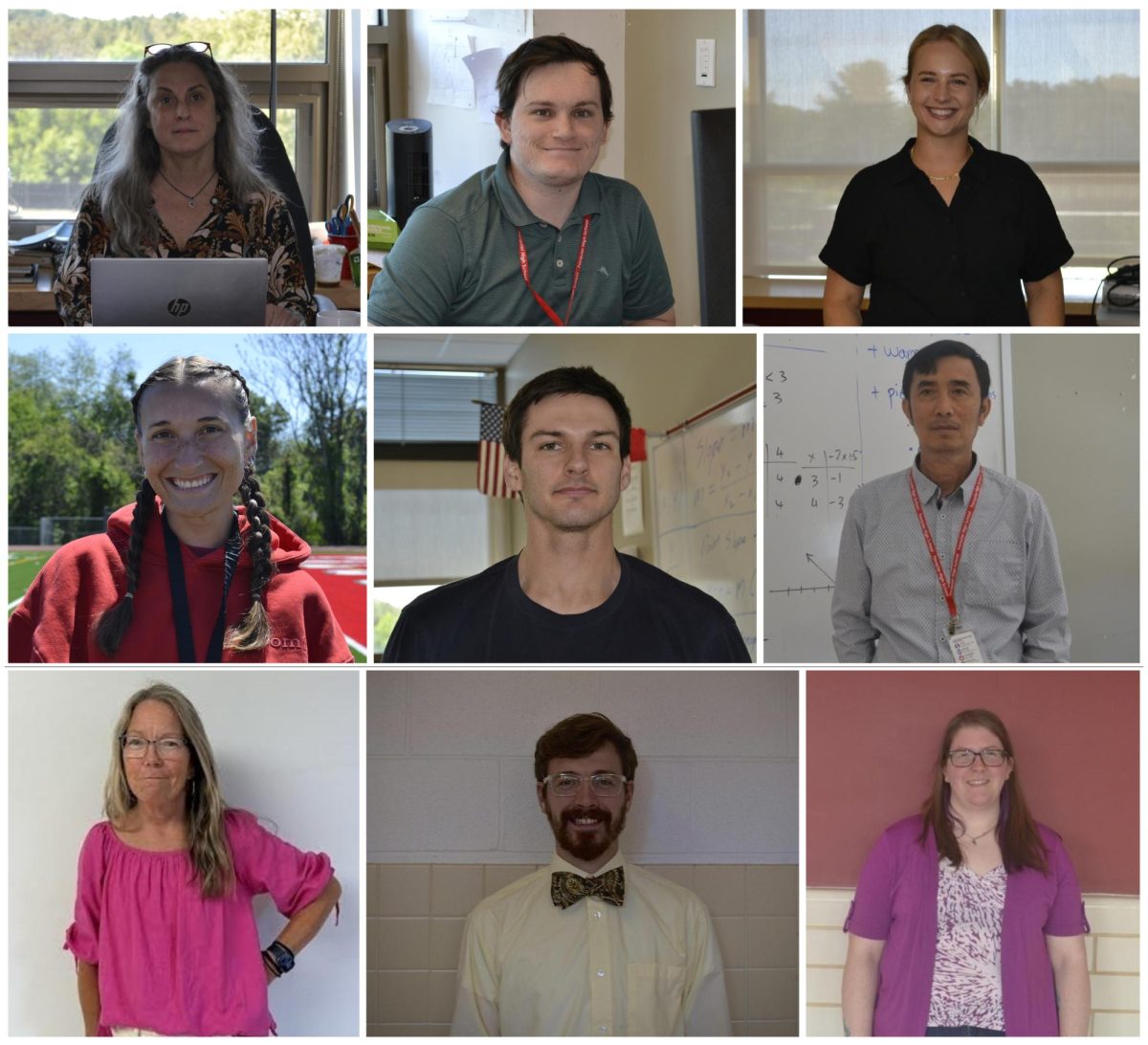
As more students choose Dual Enrollment (DE) for guaranteed college credit, some Fauquier High School (FHS) teachers say the program's popularity is changing the purpose of Advanced Placement (AP) classes. While AP exams once served as the primary way to earn college credit, many students now prioritize DE credits instead, often leaving the AP exam as an afterthought.
FHS has offered AP/DE classes for more than 20 years. However, finding teachers qualified to teach those courses is difficult. While anyone with a bachelor’s degree in the subject they teach can instruct an AP class, DE requires additional credentials. A teacher must “Either have a master's degree in the subject or a certificate with 18 credit hours in the subject,” as noted by AP/DE World History teacher Charles Keith.
Despite the additional requirements, many students see the benefits of taking college-level courses. “The college credit is helpful, but taking a DE class often comes with taking an AP class, and I wanted to challenge myself,” senior Grace Faulk expressed.
Faulk’s classmate, senior Mackenzie Knott, shared a similar perspective: “I really care about my AP scores, and I care about my classes… either way, whether I'm dual enrolled or not, I'm going to study really hard for whatever exam I'm taking.”
While students set their feet into the pool of college-level academics, teachers must constantly balance the demands of two different programs. Some instructors have found ways to align the curriculum.
AP/DE US Government teacher Kristy Burkhart explained how she aligned two systems: “I spent a long time comparing the curriculum that Laurel Ridge (community college that partnered with FHS to offer DE) wants me to go over and what the College Board gives out for the AP standards…I looked at all of them and was like ‘okay, these kind of match up.’”
AP/DE Statistics teacher Henry Konstanty explained that the DE component doesn’t significantly change his approach. “The dual enrollment is just an extra added piece. It doesn't affect how I teach the class.”
However, courses like English and history often require teachers to cover far more material within a limited amount of time. AP Language and Composition teacher Traci Mellor must combine three separate courses: AP Language and Composition, along with Laurel Ridge’s English 111 and English 112. The amount of material creates significant challenges.
Mellor admitted, “It's nearly impossible to get all of it done, to check all the boxes…it's discouraging as a teacher because I feel like I'm just set up for failure because there's just not enough time.”
Keith faces similar pressures in history classes. In addition to AP World History standards, he must also cover state-required curriculum and DE material. After teaching the course since 2011, he has gradually adapted his approach to manage the workload. Over the years, he explained that he has “tweaked and manipulated the material to where I can just barely get through it.”
Considering the demanding schedule, some might worry that students cannot keep up. For Keith, though, the opposite is often true. “Most of the students, really good students, rise to the occasion, and rise to the high expectations.”
Despite that, one major concern remains: some students prioritize DE credit over AP exam performance. As Mellor explained, “DE combined with the AP credit makes students less inclined to try when they go to take the AP exam. So their attitude about that is, ‘Oh, I could just blow it off because I'm already getting the DE credit.’”
AP exam scores sometimes reflect that difference in motivation. In Mellor’s class, about one-third of students earn a passing score, while two-thirds score below passing. In Keith’s class, the average AP score is about 2.5 out of 5.
Since Fauquier County currently pays for all AP exams, some teachers question whether the policy encourages students to take the test seriously. “You are gonna have people that just show up and draw hand turkeys…I don't know why we should pay for those kids, though,” Burkhart said.
Konstanty proposed an alternative to this issue. “I think that we should require students to pay up front for the AP exam and then reimburse them if they pass.”
Faulk supports a similar solution, pointing out that the county must pull funding from other areas to cover exam costs. “They’re taking money away from the agriculture teachers who are no longer on a 12-month salary…part of their paycheck is going to the kids who are going to AP/DE class just to get the DE credit, and [they don’t care about the AP exam.]”
Some teachers have even suggested separating AP and DE classes, arguing that the two programs sometimes outweigh each other. However, such a change might shift student choices.
“I think students would probably lean more towards DE. I know a lot of students have test anxiety, so that contributes to the choice,” counselor and AP coordinator Mickaela Stinson suggested.
For now, the future of AP/DE classes at FHS is unclear. As DE remains students’ go-to, AP classes shift to the background, even for the teachers who teach them. As Burkhart put it, “AP does become secondary… now that I teach AP/DE and not just AP, even for me, AP may be a little bit secondary too.”